Bankart Lesion

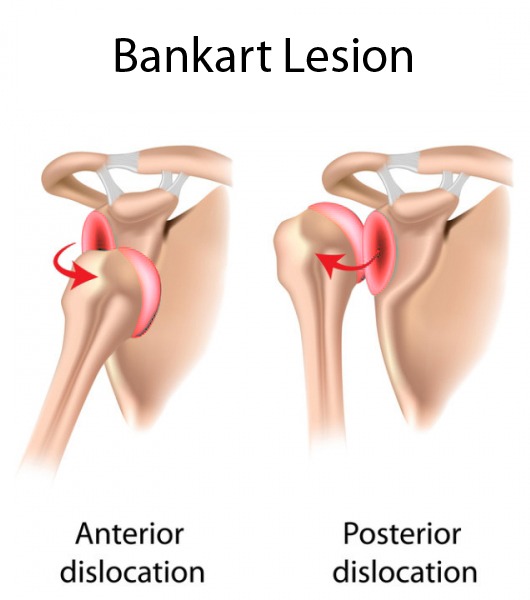
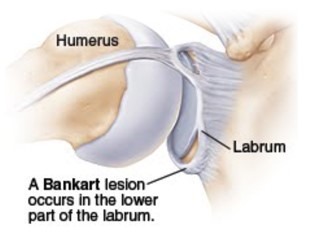
Our shoulder joint is made up of humerus (ball) and the glenoid (socket). The socket of the shoulder (glenoid) is covered with a layer of cartilage (labrum) that helps stabilize the shoulder joint. Repetitive overhead shoulder movements or any other trauma can cause the labrum to tear. Labral tears are often described by their location. One of the most common labral injuries is the Bankart Lesion. It is named after English Orthopaedic Surgeon Arthur Sydney Blundell Blankart, who first described the injury and the surgical repair. It is also called Glenoid Labrum Tear. A bankart lesion occurs when the labrum at the bottom front of the glenoid gets torn from the cartilage and bone. This tends to happen when the shoulder dislocates anteriorly, that is the head of the humerus is popped forward out of the glenoid socket. Along with the labrum, if the bone is also damaged (fractured), it is called Bony Bankart Lesion. When the lesion to the labrum occurs simultaneously with a structural defect of the bone of the humeral head, it is called a Hill-Sachs Lesion.

When the glenoid labrum is torn below the front of the socket, Bankart lesion forms.  When there is a tear in the labrum, the cartilage rim around the socket is exposed, causing the humeral head to slip farther than normal.  Majority of Bankart lesion occurs due to anterior dislocations when arm is extended to the side (movement of the arm is too far forward).  A Bankart lesion can also happen when the arm is forced backwards (posterior dislocation), thereby tearing the labrum, however it is not very common.  Bankart lesion, if left untreated, can lead to chronic shoulder instability, causing the shoulder to dislocate again in the future, though the situation of the shoulder dislocation may be less force than the original injury.


Bankart Lesion – Causes

The same mechanisms that can lead to a shoulder dislocation are amongst the causes leading to Bankart lesion.  Bankart Lesion is common sports injury among athletes who play volleyball, football, handball, basketball, tennis, wrestling etc. It is also common among people who do repeated overhead activities like construction workers.  Collision and accidents can also cause Bankart lesion.  Another cause of Bankart Lesion is trauma which causes forceful movement of the shoulder.   Though anyone can cause this injury, It commonly occurs in elderly people particularly woman, above 60 years due to falls and young men in their twenties.  Bankart Lesions are often caused by a shoulder dislocation, either partial or complete.  Common causes of a Bankart lesion are the following:

bankart lesion
bankart lesion

Car accidents:  A labral tear can happen when there is a sudden blow to the shoulder, knocking the ball from its socket.

Competitive sports:  Crashing into one another with speed and force, for example while playing football and hockey.  During the collision, the shoulder can be shoved out of alignment or drag the arm forward or backward, causing dislocations

Falls during sports:  While playing sports like gymnastics, skating and skiing, there are chances of falling and landing on one’s shoulder, increasing the risk of dislocations

Falls not related to sports:  If you thought Bankart lesion can happen only with a violent blow during an accident or sport, you are wrong!  It can happen even while doing household chores at home,  for example falling off ladder or tripping on a crack in the footpath can deliver enough force to dislocate the shoulder.  Senior citizens and people with gait impediment are more susceptible to these kinds of falls as there is an increased incidence of falls onto the shoulder.

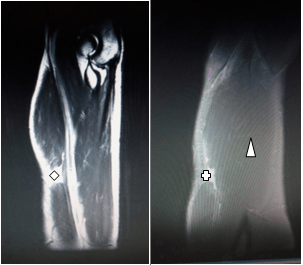
X Ray showing Bankart Lesion

Overuse injuries:   People who engage in repetitive sports are the ones who are prone to overuse injuries.  Overuse of the shoulder can cause loose ligaments and instability.  Swimmers, tennis players, volleyball players, baseball pitchers, gymnasts, and weight lifters are prone to this kind of injury.  Don’t think that non-athletes are immune to overuse injuries.  People who engage in repetitive motion in work such as swinging a hammer are at risk of overuse injuries.

The bottom line is any sport or physical activity that can cause shoulder dislocation pose a risk for Bankart lesion.

Loose ligaments :  Some people are prone to loose ligaments on account of genetic factors.  Their shoulder can pop out of the shoulder socket easily.

Physical abuse:  Violent physical actions, abuse, bullying can involve falls, blows or sudden wrenching movements that may pull the shoulder ball from the socket, thereby damaging the surrounding tissues.


Bankart Lesion – Symptoms

Ironically, symptoms of a Bankart lesion shares many symptoms with other shoulder injuries.  A thorough physical examination is necessary to properly diagnose the underlying condition of the shoulder.  Moderate to severe shoulder pain. Weakness and instability of the shoulder. Popping and clicking sensation when the shoulder is moved. Loss of range of motion of the shoulder. Repeated episodes of shoulder dislocation.


Typically, symptoms of a Bankart lesion may exhibit:

Pain:  When trying to reach overhead during sleep or during day-to-day activities.  Throwing a ball can trigger good amount of pain

Instability and weakness:  The shoulder may just hang there.  It may pop out of the shoulder socket and you may feel loose

Range of motion:  Let alone range of motion, moving the shoulder itself may be difficult.  Limited range of motion and moving the shoulder in any direction triggering pain is a clear-cut sign of Bankart lesion.

Unusual noise or sensations in the shoulder:  Grinding or a catching sensation with shoulder subluxation or a popping sound can be all symptoms of a Bankart lesion.


Bankart Lesion – Diagnosis

Diagnosis begins with evaluation the past medical history of the patient.  Physical examination provides a good clinical indication for a Bankart lesion.  Your orthopaedic/shoulder doctor uses one or more of the following methods to diagnose a bankart injury:

o          Physical Examination

o          X-rays

o          MRI

o          Arthroscopy

o          MR arthrography

o          Radiographs (particularly for bony bankart lesions)


Bankart Lesion – Treatment Options

Depending on the severity and case of the Bankart Injury (traumatic injury, or chronic condition that arose without any apparent trigger), there are two types of treatment options – surgical and non-surgical.  The first line of treatment is conservative and it involves temporary immobilization of the affected shoulder with a sling until the inflammation has subsided.   If the bankart tear does not heal properly, it leads to further dislocations, instability and weakness of the shoulder.


Non-surgical treatment options


o          Rest and immobilization (with or without a sling)

o          Pain killers and Non-steroidal drugs (if the condition demands)

o          Physical Therapy.  With the help of a physiotherapist, you may be given an exercise program to stabilize the shoulder joint.  Make sure you adhere to exercise program completely and doing the exercises the way it should be done is very importation for rapid healing.

It should be understood that with conservative treatment, there are chances of shoulder dislocating again.


Surgical Treatment:

If your shoulder continues to dislocate and feel unstable even after treating it with non-surgical methodologies, it may be time to think about surgery.

Arthroscopic Bankart Reconstruction (or simply Bankart Repair Surgery)

Surgery is often opted for younger patients and who play sports as there is an elevated risk of recurring dislocations. Surgery is often opted for patients whose condition does not improve using standard non-surgical methods of treatment. The purpose of surgical correction of Bankart Lesion is to reattach the torn labrum to the socket of the shoulder thus restoring stability to the shoulder. In most of the cases, surgery is performed arthroscopically (key hole surgery) however in some cases, standard open incision is required. Arthroscopic surgery also has the advantage of less pain and faster recovery compared to open surgical method. Surgery is successful in most of the cases allowing them to return to regular activities without the incidence of recurring dislocation. Complications after a bankart repair surgery are very rare. However as with any surgical procedure, this surgery may develop some risk like bleeding, infection, shoulder stiffness, injury to blood vessel or nerve.


Depending on the severity of the injury, other operative interventions to repair a Bankart lesion may include:


  • Re-attaching the ligament
  • Bone reshaping or grafting which will lend stability to the shoulder socket (glenoid)
  • Thickening, building up or reshaping of the glenoid labrum cartilage
  • Repair and ligament tightening to undo looseness and lend stability


Bankart Lesion – Rehabilitation

Post surgery, patient will be advised to wear a sling for first few weeks. Almost immediately, he has to undergo a physical therapy program. Depending on the severity of the condition, patient will be advised to keep away from certain activities for some period of time.

In patients with increased risk of shoulder dislocations due to strenuous sports activities, they are advised to wear proper safety equipment. Elderly patients are advised to avoid any possible falls.


Anatomy of Shoulder Dislocation and Bankart Injury

Q&As on Bankart Lesion


  1. Why does my shoulder keep slipping out after a dislocation?

A Bankart lesion occurs when the labrum, a firm rim of cartilage around the shoulder socket, is torn during a dislocation. This structure plays a critical role in keeping the ball of the shoulder joint centred in the socket. When it is damaged, the shoulder loses an important stabilising mechanism.

After this injury, the joint may no longer feel secure during movement. Patients often report a sense of looseness rather than constant pain. Everyday actions such as reaching for objects, lifting the arm away from the body, or sudden movements can trigger apprehension. Even if pain settles, the underlying instability remains. Without restoring stability, the shoulder becomes vulnerable to repeated dislocations over time.


  1. Can a Bankart lesion heal on its own without surgery?

The torn labrum rarely reattaches naturally due to its limited blood supply. That said, not everyone with a Bankart lesion needs surgery. In some cases, especially after a first dislocation, symptoms can be controlled with a structured rehabilitation programme.

Physiotherapy treatment focuses on strengthening the muscles that support and control the shoulder joint. Improved muscle control can reduce instability symptoms and help some patients return to daily activities comfortably. However, if the shoulder continues to slip, feels unreliable, or dislocates again, surgery may be advised to restore joint anatomy and prevent further damage.


  1. How is a Bankart lesion different from other shoulder injuries?

A Bankart lesion is primarily an instability problem. Unlike muscle or tendon injuries, strength may appear normal, yet joint control is compromised. Pain is often activity-related and linked to positions that challenge shoulder stability rather than constant discomfort.

This distinction matters because treating a Bankart lesion as a simple muscle injury may not address the underlying issue. Persistent instability increases the risk of further dislocations and additional joint damage. Correct diagnosis ensures treatment targets stability rather than just pain relief.


  1. What symptoms suggest that surgery might be necessary?

Surgery is considered when instability affects daily life or continues despite appropriate physiotherapy. Common warning signs include repeated dislocations, frequent sensations of the shoulder giving way, or avoidance of normal movements due to fear of instability.

Pain that comes on during sudden giving-way or slipping of the shoulder, rather than during normal muscle activity, is an important warning sign. With each dislocation, the risk of injury to the shoulder’s cartilage and bone structures increases. In carefully selected patients, early stabilisation surgery can reduce the risk of recurrent dislocations and help preserve long-term shoulder function.


  1. What does Bankart repair surgery actually do?

Bankart repair surgery restores stability by reattaching the torn labrum to the shoulder socket. This is usually performed arthroscopically using small instruments and anchors that secure the labrum back in place.

The procedure aims to recreate the shoulder’s natural stabilising mechanism. Modern techniques focus on providing stability without excessively tightening the joint. The goal is a shoulder that feels secure while allowing smooth, confident movement during daily activities and sports.


  1.  What is recovery like after Bankart repair surgery?

Recovery follows a phased approach. Initially, the shoulder is protected in a sling to allow healing of the repair. Gentle, guided movement is then introduced to prevent stiffness. Strengthening exercises are added gradually under physiotherapy supervision.

Rehabilitation is as important as the surgery itself. Skipping stages or returning to activity too early increases the risk of failure. Most patients regain comfortable daily use within a few months, while returning to higher-level physical activity takes longer and depends on consistent rehabilitation.


  1. What happens if a Bankart lesion is not treated properly?

When shoulder instability persists, the joint may dislocate repeatedly. Over time, this can result in bone loss from the socket and joint surface wear. Such structural changes can complicate future treatment and may limit the effectiveness of simpler repair options.

Early assessment and a tailored management plan reduce the likelihood of chronic instability and help preserve shoulder function and comfort in the long term.


  1. Can imaging tests always detect a Bankart lesion?

Imaging tests such as MRI are valuable for identifying a Bankart lesion and assessing associated injuries. However, small or subtle tears may not always be clearly visible. A detailed medical history and physical examination remain essential. Imaging supports clinical decision-making rather than replacing it.


  1. Is it safe to return to sports after a Bankart lesion?

Return to sports is usually possible once shoulder stability, strength, and control are restored. The timeline depends on injury severity, treatment method, and rehabilitation progress. A gradual, supervised return reduces the risk of recurrence and supports long-term shoulder confidence.


  1.  Does a Bankart lesion increase the risk of early shoulder arthritis?

Repeated shoulder dislocations associated with an untreated or poorly controlled Bankart lesion can lead to joint wear over time. Each episode places stress on the cartilage and bone surfaces, which may accelerate joint degeneration. Stabilising the shoulder, whether through rehabilitation or surgery when appropriate, helps reduce recurrent injury and may lower the long-term risk of arthritis.

 

© Copyright 2025 Bangalore Shoulder Institute