
- By shoulderadm
- In Blog
Rotator Cuff Tear Versus Bursitis
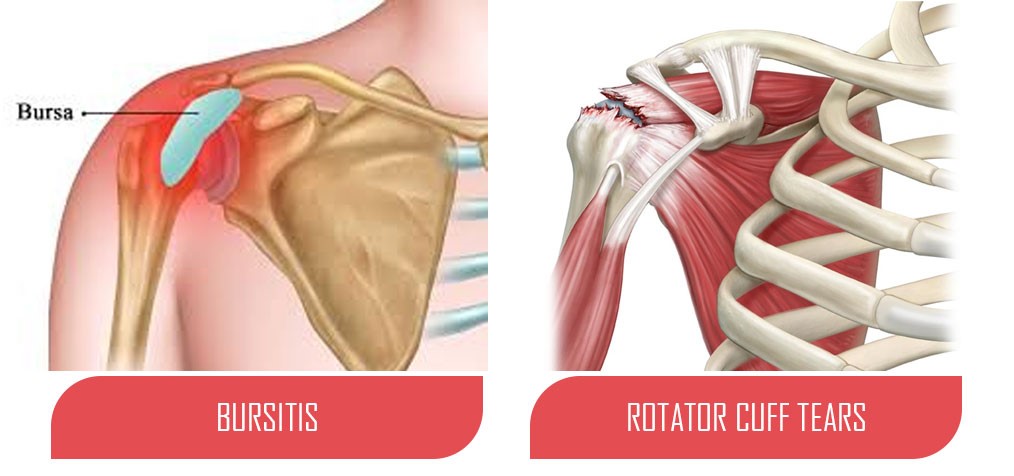
Rotator tear cuff and bursitis are conditions that may affect your shoulder. Both these conditions may cause pain and swelling and limit your mobility. Consult your orthopedic specialist to find out the type of condition you are suffering from to get appropriate treatment. Going forward, you will learn the difference between rotator cuff tear and bursitis.
What are rotator cuffs?
Rotator cuffs are the group of muscles and tendons that are found around the shoulder and help keep the head of the upper arm bone within the socket.
Rotator cuff tear
Your shoulder joint has lots of support from tendons and muscles. This group of tendons and muscles form the rotator cuff. A tear occurs when there is a tear of the tendon that connects the muscles and the bone.
Some common symptoms
- Shoulder pain
- Muscle weakness
- Stiffness of the shoulder
- Difficulty in moving the shoulder for doing routine activities
- Popping sensation
Causes of rotator cuff tear
- Injuries like a tear in the tendons, either partially or completely, may cause damage to your rotator cuff.
- Overuse of the shoulders will cause stress, and thereby a tear may occur in the rotator cuff.
- Any previous surgery may also weaken the rotator cuff and make it prone to tears.
- Due to ageing, the rotator cuffs may degenerate and naturally weaken. This may also cause a tear as they are more vulnerable.
- Structural abnormalities of the shoulder may also be the reason for a rotator cuff tear.
Treatment
Rest, physical therapy, and medications can cure rotator cuff tears. If the tear is severe, the orthopedist may prescribe a surgical procedure.
Bursa
There are small sacs in the shoulder that are filled with fluid to reduce friction in the moving joints of the shoulder. These are called shoulder bursae.
Bursitis
Too much friction between the bone and the tissues protecting them may cause inflammation in the bursa. This leads to the condition called bursitis.
Symptoms
- Shoulder pain
- Pain after any activity or movement
- Weak muscles
- Tender shoulders
- Warmth around the affected area
- Restricted movement
Causes of bursitis
- Any strong blow to the shoulder causing injury to the bursa can lead to bursitis.
- Ageing can make the bursae prone to degeneration and increase the possibility of bursitis.
- Repeated movements due to your occupation may also stress the bursa and cause inflammation.
- Excessive pressure due to exercise or related activities can cause inflammation of the bursa.
- Any infection in the bursa can also lead to bursitis.
- Inflammatory conditions like rheumatoid arthritis may affect the bursae and cause bursitis.
- Poor posture can also increase stress on your bursae and ultimately result in bursitis.
Treatment
The treatment methodology will depend on the severity of your symptoms. For chronic bursitis conditions, the orthopedist may prescribe analgesics, ice packs, and restriction in movement.
If there is an infection in your bursa, you may also be prescribed antibiotics in addition to painkillers. For fluid accumulation, a simple procedure is conducted to remove the fluid from your bursa.
For enquiries and online appointments, send a message to
www.BangaloreShoulderInstitute.com/contact
For informative videos related to Shoulder problems and their treatment options, Sports
Injuries and other orthopedic conditions, visit the YouTube channel Bangalore Shoulder
Institute – https://www.youtube.com/@BangaloreShoulderInstitute


