
- By shoulderadm
- In Blog
Understanding Shoulder Lumps: Causes, Diagnosis and Treatment
Finding a lump on the shoulder can be unsettling. Although many shoulder lumps are harmless, some merit prompt medical review. A clear grasp of possible causes, diagnostic steps, and treatment choices helps ensure timely, effective care.
Causes of Shoulder Lumps
Shoulder lumps arise from numerous conditions. The majority are benign, yet a few may signal a more serious disorder.
Benign Growths
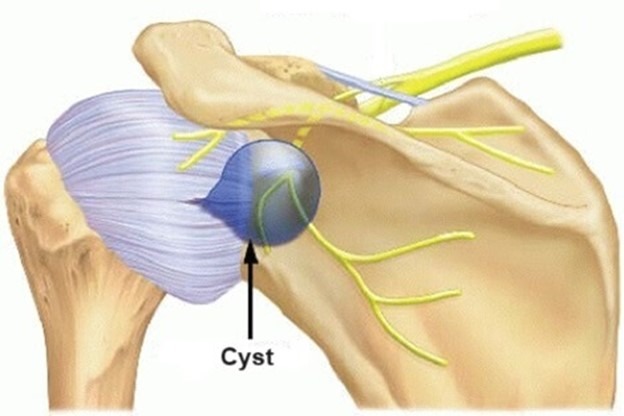
Most shoulder lumps are soft-tissue masses such as lipomas. These fatty swellings feel soft, move slightly under the skin, and usually grow slowly without pain. Other benign causes include epidermoid cysts, ganglion cysts and simple bone cysts, often detected incidentally during imaging for unrelated problems.
Inflammatory and Infectious Causes
Bacterial infections can produce abscesses—painful, warm, swollen lumps that may be accompanied by fever. Long-standing inflammatory conditions, notably rheumatoid arthritis, may form firm nodules near the joint, while osteoarthritis can generate bony projections (osteophytes) felt as hard lumps.
Injury-Related Swellings
Chronic shoulder injuries, especially rotator-cuff tears, may lead to fluid collections or local swelling that feels lump-like. Such swellings can restrict movement, cause aching discomfort, and occasionally irritate nearby nerves.
Malignant Tumours
Far less common, malignant tumours such as sarcomas can also present as shoulder lumps. These typically enlarge rapidly, feel firm or fixed, and may cause persistent pain or other systemic symptoms. Early recognition is critical to improve outcomes.
Diagnosis of Shoulder Lumps
Accurate diagnosis relies on a structured clinical approach.
Physical Examination
The doctor evaluates the lump’s size, texture, mobility, tenderness, and any skin changes. Additional symptoms such as restricted movement or neurological signs may offer further clues.
Imaging Studies
Ultrasound is a useful first-line test for soft-tissue lumps; it distinguishes solid from cystic lesions and guides needle aspiration when needed. X-rays identify calcification or bony involvement. MRI delivers detailed information on both bone and soft tissue, clarifying the extent of deeper or more complex masses. In some cases, a CT scan may be used to assess cortical bone or detect subtle mineralisation.
Biopsy
When the lump’s nature is unclear or cancer is suspected, a biopsy—removal of a small tissue sample for laboratory analysis—can confirm the diagnosis.
Treatment Options for Shoulder Lumps
Treatment is guided by the specific cause of the lump.
Observation
Small, painless benign lumps that do not interfere with daily activities may simply be monitored at intervals, with repeat imaging if the size changes.
Surgical Removal
Lumps that enlarge, become painful, restrict function or raise cosmetic concerns are often excised. Procedures range from minor day-case excision of lipomas or cysts to more extensive surgery for deeper masses.
Drainage
Abscesses and certain cysts require incision or needle drainage to remove pus or fluid, followed by appropriate antibiotics when infection is present.
Medical Management
Infective lumps are treated with tailored antibiotic regimens. Inflammatory nodules due to arthritis may respond to disease-modifying drugs, anti-inflammatory medication, or corticosteroid injections.
Rehabilitation
After surgery, physiotherapy may be advised to restore movement and strength, particularly if joint structures were involved.
Conclusion
Shoulder lumps include a broad range of conditions, most of which are manageable. Early evaluation ensures accurate diagnosis and timely care. Any lump that persists grows, or causes pain should be assessed to ensure appropriate treatment and preserve shoulder function.
For enquiries and online appointments, send a message to www.BangaloreShoulderInstitute.com/contact
For informative videos related to Shoulder problems and their treatment options, Sports Injuries and other orthopedic conditions, visit the YouTube channel Bangalore Shoulder Institute – https://www.youtube.com/@BangaloreShoulderInstitute


